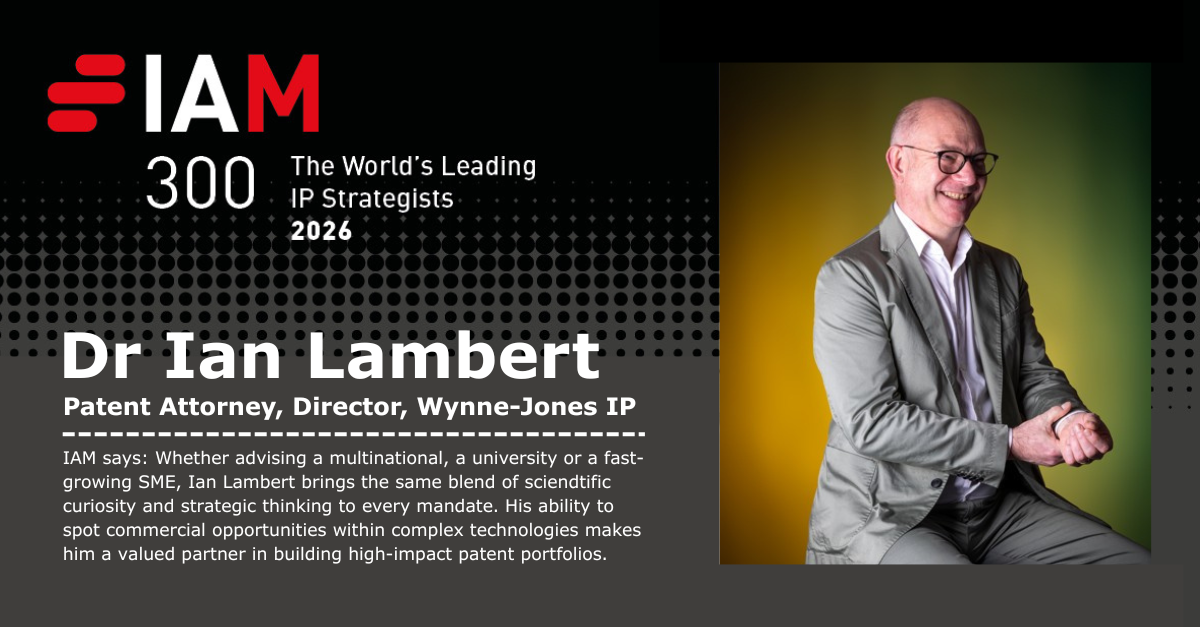
My career in intellectual property began in late 2007 at the UK Intellectual Property Office (UKIPO), where I worked in the Tribunal Section as a Caseworker. I later moved into the Examination Department as a Trade Mark Examiner, developing a detailed understanding of how applications are assessed and challenged in practice. In 2011, I was seconded to the European Union Intellectual Property Office (then OHIM) as a UK Seconded National Expert. I spent five years in Alicante, working within a broader European framework before returning to the UKIPO. From there, I progressed into Hearing Officer roles across both the Examination Department and Tribunal, before moving into private practice in 2024 as a Trade Mark Assistant at Wynne-Jones IP.
This experience, across institutions and roles, provides a clear view of what drives effective outcomes. It’s not just about the strength of a case on paper, but how that case is prepared, structured and presented under scrutiny.
Hearing Officers prioritise clarity, conciseness and relevance. These principles apply consistently, whether dealing with written submissions or supporting evidence. Hearing Officers are highly familiar with the current case law and will approach each matter with a clear sense of the legal framework and key issues in mind. The role of the advocate is not to restate the obvious, but to guide the decision-maker through the specific facts of the case in a way that is coherent, focused and persuasive.
Written submissions should be structured with intent. They should lead the Hearing Officer step-by-step, ensuring the reasoning is easy to follow and the conclusions are fully supported. Evidence must do more than exist – it should reinforce the narrative and help build a clear, credible picture. The 300-page limit is not a constraint to work around; it is a discipline that ensures only material that genuinely advances that case is included.
Oral submissions should add value. Repeating verbatim previously submitted written arguments rarely achieves this and can increase costs without improving outcomes. Instead, hearings should be used to sharpen key points, address areas of uncertainty, and respond directly to the Hearing Officer’s questions. Preparation is essential. Anticipating challenges to the weaker aspects of the case allows for confident, measured responses that maintain credibility throughout.
Arguments should be presented logically and with purpose. Precedent should be used selectively, to support key points rather than overwhelm them. Strong cases are focused. They identify where they are most persuasive and build around that strength, while also addressing any vulnerabilities with honesty and preparation. Weak or poorly supported claims dilute the overall position and can undermine confidence in an argument as a whole.
Having worked on both sides of the process, there is a clear understanding of the pressures involved. Hearing Officers expect clarity and substantiation, but they do not always see the constraints advocates face – tight timelines, limited evidence, budget considerations, or competing client priorities. Navigating these challenges requires judgement, discipline, and a steady focus on what will deliver the best outcome.
At Wynne-Jones IP, our approach is simple: Reduce complexity, strengthen the signal, and present a case that stands up to scrutiny. Quietly, effectively, and always with our clients objectives at the centre.